Local News
A Thousand Young Somalis Sit One Exam, and Make an Argument Against the Migrant Boats
At Hormuud University, the Minister of Labour opened a recruitment examination built on a simple promise, that a job at one of Somalia's largest companies can be won by merit alone, and a young candidate turned it into a message for every Somali tempted by the smugglers' routes: trust your country.
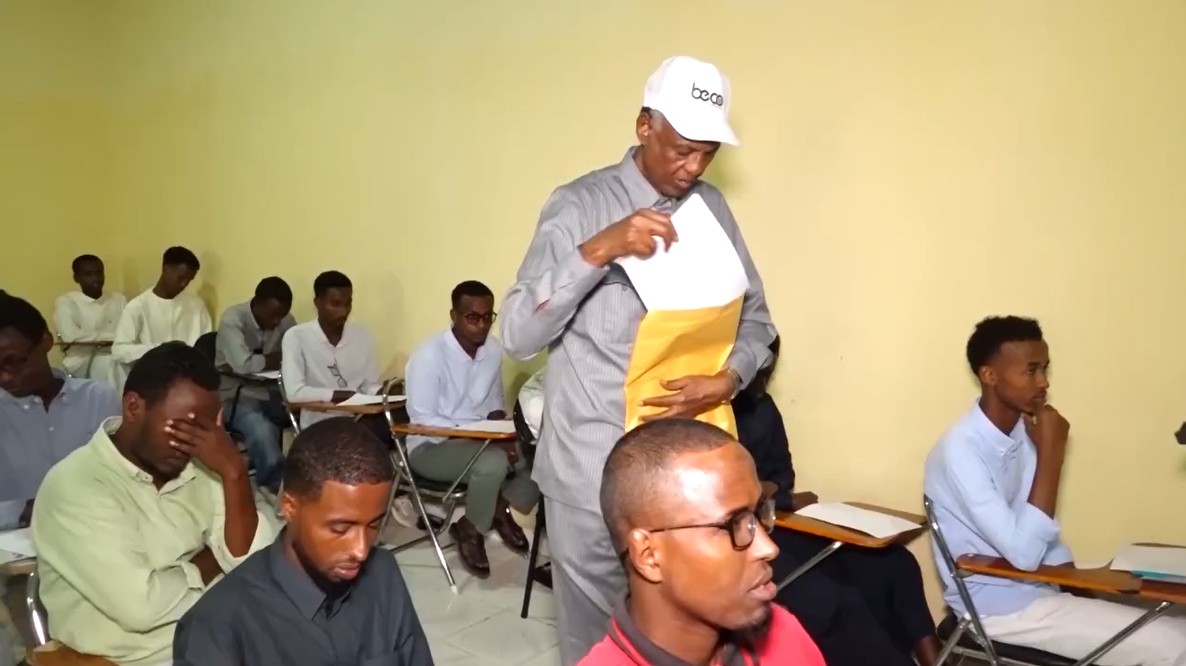
MOGADISHU (SONNA): More than one thousand young Somalis, drawn from regions across the country, filled the halls of Hormuud University in Mogadishu to sit the annual recruitment examination of the BECO electricity company, in a programme opened by the Minister of Labour and Social Affairs of the Federal Government of Somalia, Hon. Salim Aliyow Ibrow.
The examination is the gateway to employment at one of the country's largest private companies, and its terms were stated plainly by the company's Head of Human Resources, Mohamed Abukar Hussein. Recruitment at BECO, he said, is one hundred percent examination-based, with every candidate submitting an application freely and joining the workforce only by passing the required tests, and he added a promise for those who succeed, that promotion and rank inside the company are likewise tied to knowledge, skill and ability. Company officials said the annual programme is built on transparency, fairness and open competition, designed to select capable staff who strengthen the services the company provides to the public.
The Minister, closing the ceremony, commended the role BECO plays in creating work for Somali youth, and pressed the principle underneath the day. Employment, he said, should connect companies and open vacancies, with firms advertising the posts they need and choosing in their own interest, not a matter of an uncle carrying a young person to his superior. The company's Head of Social Affairs, Abdirahman Mohamed Adle, said the event would not be the last of its kind, thanked the young people for the courage of coming forward, and named the barrier the programme exists to break, that many Somali youth never apply for such opportunities because they assume a job requires an uncle or an aunt to carry the application for them.
The most striking testimony came from the company's own ranks. Mohamed Sadaq Sheikh Mohamed, who heads the firm's training institute and its international relations, told the candidates to accept any work, even portering, insisting that there is no joblessness in the city for those who are not too proud to start low. He offered himself as the proof, an operational manager in the company today, he said, who rose by God through portering. Start at the bottom, he told them, and the first to rise will be you.
Among the candidates, the day carried a larger meaning still. One young participant, asked about the examination, turned his answer into an address to the young Somalis who board the smugglers' boats. To the youth migrating, he said, trust your country, for opportunities like this exist in it, people working eight-hour nights, ten trades and more plied in a single day. Come and work, he urged, praising the fairness and transparency the company had pledged, and closing with a blessing for what he called the clean path, the road on which anyone who has learned something can earn.
His words land on one of the deepest wounds in Somali life. For years, the route known as tahriib has drawn young Somalis toward the deserts and the sea, sold by smugglers on the promise that a future exists only elsewhere. What drives them is rarely mystery, it is the belief that at home, work is scarce and what work exists is locked behind connections. Against that belief, a hall of one thousand candidates sitting a single open examination is a rebuttal in the most practical form available, and the promise that hiring and promotion answer to merit rather than kinship strikes at the exact despair the smugglers harvest. A country persuades its young to stay not with appeals but with fair chances, visibly given.
The examination will produce its results, and most of the thousand will not be among the names selected, that is the nature of open competition. But the day's meaning does not rest on any single list of names. It rests on the spectacle itself, a Minister, a major company and a thousand young Somalis assembled around the proposition that ability is the currency of work in their country. Every young person who leaves that hall believing the proposition, whether hired or not, is one argument the smugglers have lost. The clean path, as the young candidate called it, is built exactly this way, one fair examination at a time.