Local News
Somalia answers Abu Dhabi: three ministers, one message, and the UAE's selective memory
An adviser to the UAE President replied to President Hassan Sheikh Mohamud's address without addressing any of it. The Ministers of Defence, Public Works and State for Foreign Affairs answered him within hours.
Advertisement
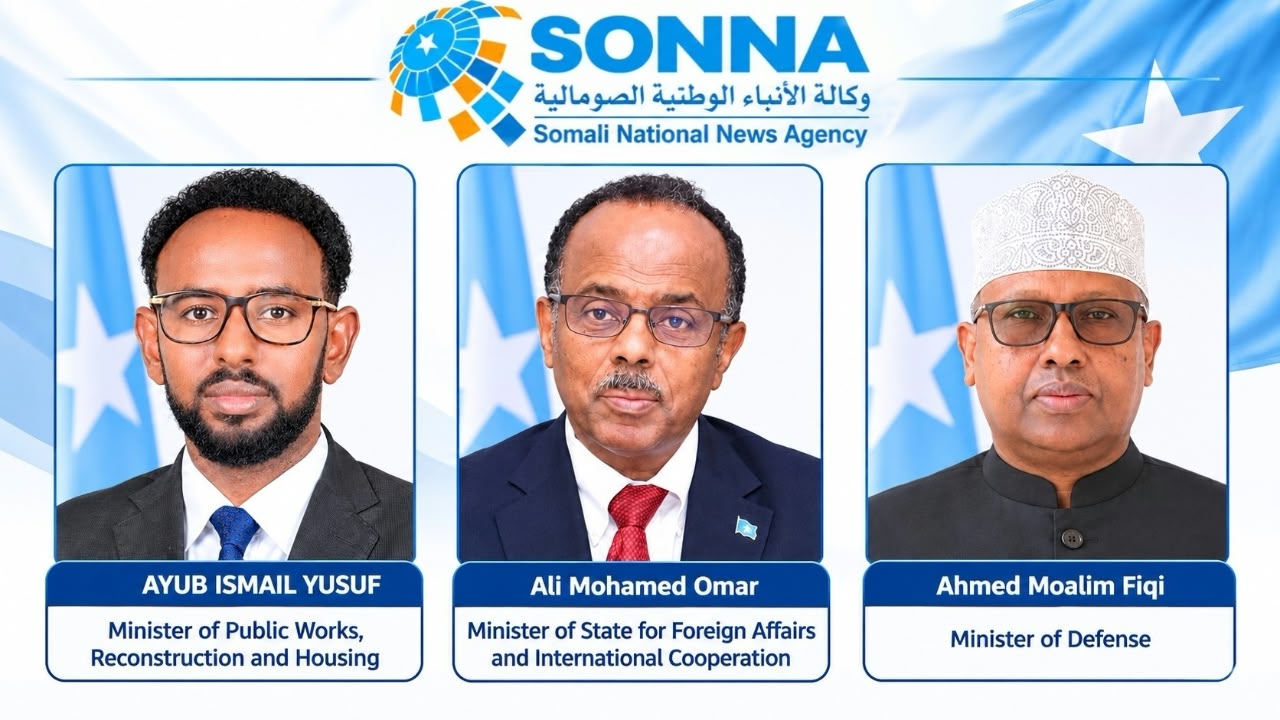
Mogadishu (SONNA) - A day after President Hassan Sheikh Mohamud told the nation that the United Arab Emirates had spent years working to weaken and divide Somalia, Abu Dhabi gave its answer. It did not come from a foreign ministry, and it did not take up a single matter the President had raised. It came as a post on social media from Anwar Gargash, diplomatic adviser to the UAE President, and within hours three ministers of the Federal Government had replied to it, in Somali, in Arabic and in English.
Writing in Arabic on Wednesday, Gargash described the President's address as an attack on the UAE. He said it reflected shifting positions and personal calculation, and he referred to the President's term of office as having ended. He said the UAE had stood by Somalia and its people in their darkest circumstances, and that he regretted what he called internal disputes over power in Somalia being drawn into regional quarrels. The UAE's relationship with the Somali people, he added, would outlast passing political differences.
What the adviser left out is as telling as what he wrote. The President had set out a detailed case on Tuesday night: agreements over the ports of Berbera, Bosaso and Kismayo signed with regional administrations and without the Federal Government; military bases and forces established outside Somalia's national command while the army is fighting Al-Shabaab; political and financial support that fuelled disputes inside the country; a role in Israel's recognition of Somalia's northern regions; and the use of Somali territory at Berbera in January 2026 to move a militia leader fleeing Yemen, without Somalia's consent. On each of these, Abu Dhabi's reply was silence.
Profit from the ruin of others
The hardest answer came from the Minister of Defence, Ahmed Moalim Fiqi. Writing in Somali, he said the UAE is a government that seeks profit and prestige from the suffering and destruction of other nations. He said it has turned its wealth into a means of genocide, of driving Muslim people from their homes, and of destroying states that sit beside it in the Arab League.
The Minister thanked the President for making Somalia's position clear towards what he called a state of evil, so that the Somali people know of the plot the Emirates is running against their dignity and their statehood. He has also said that Somalia's sovereignty and unity are not open to negotiation, and that the UAE has tried to buy loyalties and to set up security structures outside the authority of the state.
A country that cannot be bought
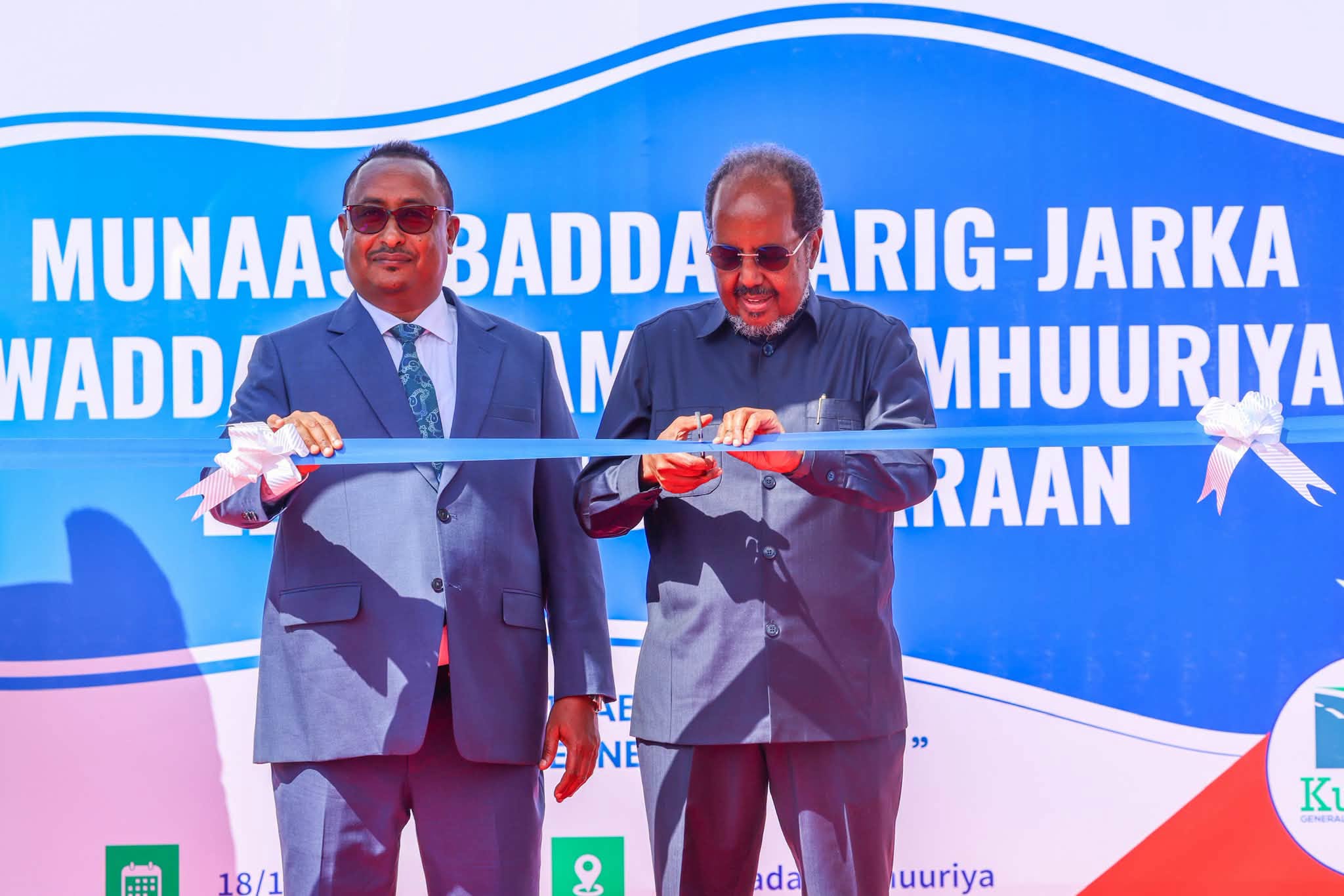
The Minister of Public Works, Reconstruction and Housing, Ayub Ismail Yusuf, answered the adviser directly and in his own language. Writing in Arabic, he said the UAE chose to make its money a tool for feeding division, weakening the institutions of the Somali state and opening the door to foreign interference, including by Israel, in a matter that concerns Somalia's sovereignty and national unity.
Somalia, the Minister said, is not a homeland that can be bought with influence, nor a state that money can break. Everything spent to tear it apart, he said, will be wasted.
The State Minister for Foreign Affairs: the record of the ports
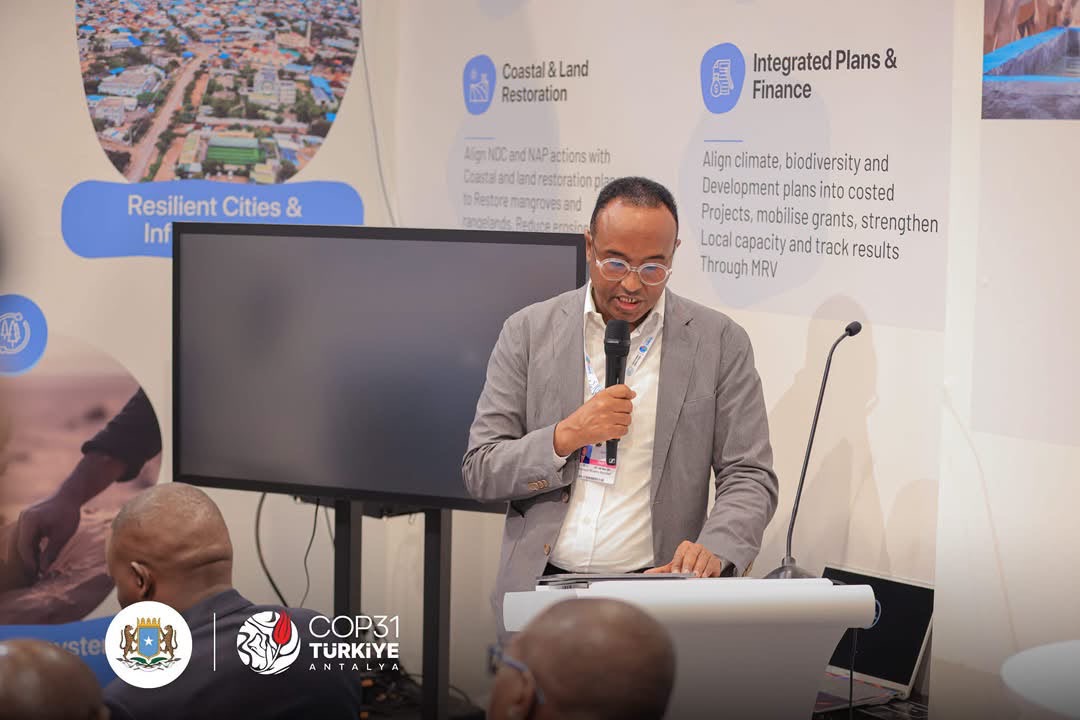
The third reply came from the Minister of State for Foreign Affairs, Ali Mohamed Omar, who answered the adviser in English and went to the substance that Abu Dhabi had avoided.
"Somalia's national interest is not advanced by fragmenting the state or by dealing with subnational entities outside the authority of the Federal Government," he wrote. He said agreements on strategic ports such as Berbera, Bosaso and Kismayo, together with security arrangements and political support that bypass the Federal Government, undermine national unity and create parallel authorities.
"This approach has never strengthened Somalia; it has only deepened its divisions," the Minister said.
Taken together, the three replies make one argument. The Defence Minister spoke to what the UAE has done across the region, the Public Works Minister to what its money was meant to do in Somalia, and the State Minister for Foreign Affairs to the agreements through which it was done. None of them was answered.
selective memory and a double standard
The most revealing line in the adviser's post is his remark about the President's term. It comes from the representative of a state whose rulers have never once put themselves before their own people. The President of the UAE is chosen by the Federal Supreme Council, a body of seven hereditary rulers. No citizen has ever cast a vote for the head of state. Political parties are not permitted. The Federal National Council, the nearest thing the country has to a parliament, is an advisory body: half of its 40 members are appointed by the rulers, and the other half are chosen by an electoral college whose members the rulers themselves select.
Somalia's record is a different one. Somalis elected their leaders in the 1960s, and in 1967 the country's first President, Aden Abdulle Osman, handed over power peacefully after losing a vote. That was four years before the UAE came into existence. Somalis debate mandates, terms and timetables because they have them. Under the Constitution as amended by Parliament in March 2026, the President has said, the term of the Federal Government runs for five years, to May 2027, when elections are due. This very month, Galmudug and Hirshabelle have elected their leadership. Questions of mandate in Somalia are answered by the Constitution, by Parliament and by the Somali people. They are not answered by an adviser to a ruler who has no term to finish and no voter to face.
The second claim, that the UAE stood by Somalia in its darkest hours, depends on a short memory. Somalia was an independent republic for eleven years before the seven emirates formed their union in 1971. Somalis recall that their country, then one of the stronger states in the region, was among those that supported the new federation in its first years, and that Somali officers, teachers and professionals helped to build its early institutions. For decades since, Somali traders and Somali capital have been part of the commercial life of Dubai, and many thousands of Somalis live and work in the Emirates today. The relationship did not begin with Emirati generosity, and it was never charity.
Nor does the record of recent years match the adviser's account. In 2012 the UAE welcomed the establishment of the Federal Government and reaffirmed its support for Somalia's sovereignty and territorial integrity. The President's case is that it then did the opposite: it signed for Somali ports with administrations that had no authority to sign, and it paid for and trained forces that do not answer to the Somali state. A friend that stands by a country does not negotiate for its harbours behind the back of its government. Somalia annulled every agreement with the UAE on 12 January 2026 for that reason, after what the President called years of patient diplomacy.
The third claim turns the facts upside down. The adviser regrets that internal disputes in Somalia are being drawn into regional quarrels. The President's argument, and the Justice Minister's before him, is that the UAE has spent heavily to create and sustain those disputes, and that Somali political figures have openly acknowledged meeting in the UAE to coordinate efforts against the government. To finance a country's divisions and then describe them as that country's internal affair is the double standard in a single sentence.
Somalia is not alone in having reached this conclusion. Sudan cut diplomatic relations with the UAE in May 2025 and declared it an aggressor state. Algeria severed ties completely on 10 September 2026, expelled the Emirati ambassador and closed its airspace to UAE-registered aircraft. Three African and Arab League states have now drawn the same line within 18 months, and each was told, as Somalia has been told, that the fault was its own.
The President did not close the door on Tuesday night, and none of the three ministers has closed it since. Somalia, the President said, is ready for a relationship with the UAE based on equality, respect and full recognition of its territorial unity, and it will defend its sovereignty by every means its laws and international law allow. Until then, the answer from Mogadishu is the one the Public Works Minister gave: Somalia cannot be bought, and what is spent to break it will be wasted.